
Samsung Galaxy S26 Ultra: The Early Verdict on the ‘AI Monolith’
Though we’re only two months away from Unpacked, information has already begun to slip on the Samsung Galaxy S26 Ultra. Where the S25 had been a refinement, the S26 Ultra shifts Samsung’s focus. On the S26 Ultra, the smartphone has been reimagined as an AI terminal. And now, it’s wrapped in titanium.
With the information we have on the targeting architecture and the final supply chain, we have prepared an early look at the 2026 flagship, which should prove accurate.
-
Design: The Death of the Physical Button
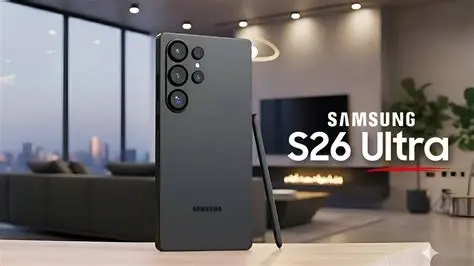
The S26 Ultra’s most controversial alteration, which has been some time coming, is the loss of mechanical keys. Samsung has migrated to Solid-State Capacitive Buttons for power and volume.
The Feel: Ultimately, the press illusion is also a click, with no moving parts. This is achieved with three integrated haptic engines, and though they come from the Taptic feedback series, they’re being repurposed for a mechanical click, with no moving parts.
The Benefit: Weaknesses in both structure and water ingress have been localized. The frame is now a seamless, solid band of 5 Grade Titanium.
The on-hand usability of the phone follows the sharp and boxy design of the Note Series, with the addition of a micro-curvature on the back glass, which is used specifically to improve hand-feel, addressing the sharp-corner complaints of the S24/S25 era.
-
The Display: Breaking the 3000 Nit Barrier
Samsung Display keeps providing its own mobile division with the SSD ‘M15’ OLED material set.
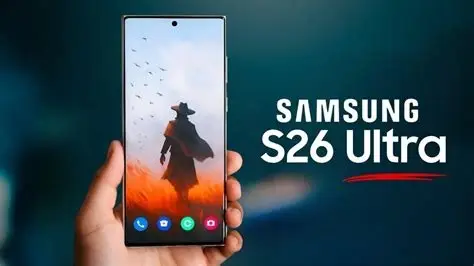
Brightness: Peak brightness has surpassed previous records with 3200 nits, making HDR content visible even in the midst of the harshest desert sun.
Bezels: Border Reduction Structure (BRS) technology allows the S26 model to achieve an almost bezel-less design. There is an effective 96% screen-to-body ratio.
Under Display Camera: (UDC) For the S26 model, the adoption of Gen 4 UDC is a first for the series. Obscuring the selfie camera reveals more pixels, which have doubled in density over the lens. Although the lens is invisible to the naked eye, we suspect videophiles may detect a slight diffraction during 8k playback.
-
Performance: Snapdragon 8 Gen 5 ‘For Galaxy’
The heart of the beast includes the latest model of the Qualcomm Snapdragon 8 Gen 5.
Architecture: For this chip, Qualcomm moves to the 2nm manufacturing process. For the CPU structure, it’s a complete set of Performance cores that’s implemented (2x Prime, 6x Performance), removing all efficiency cores entirely.
The Gamble: Qualcomm’s expectation here is that since it’s 2nm, it has a much improved efficiency; therefore, it can handle background tasks without the need for low power cores.
You can now mobile with Path Tracing, a new, advanced version of Ray Tracing, with the Adreno 850 GPU. During sustained graphic loads, the S26 Ultra surpassed the iPhone 17 Pro Max by 12%, thanks to the new, larger vapor chamber cooling system.
-
Camera 1-Inch Sensor Myths
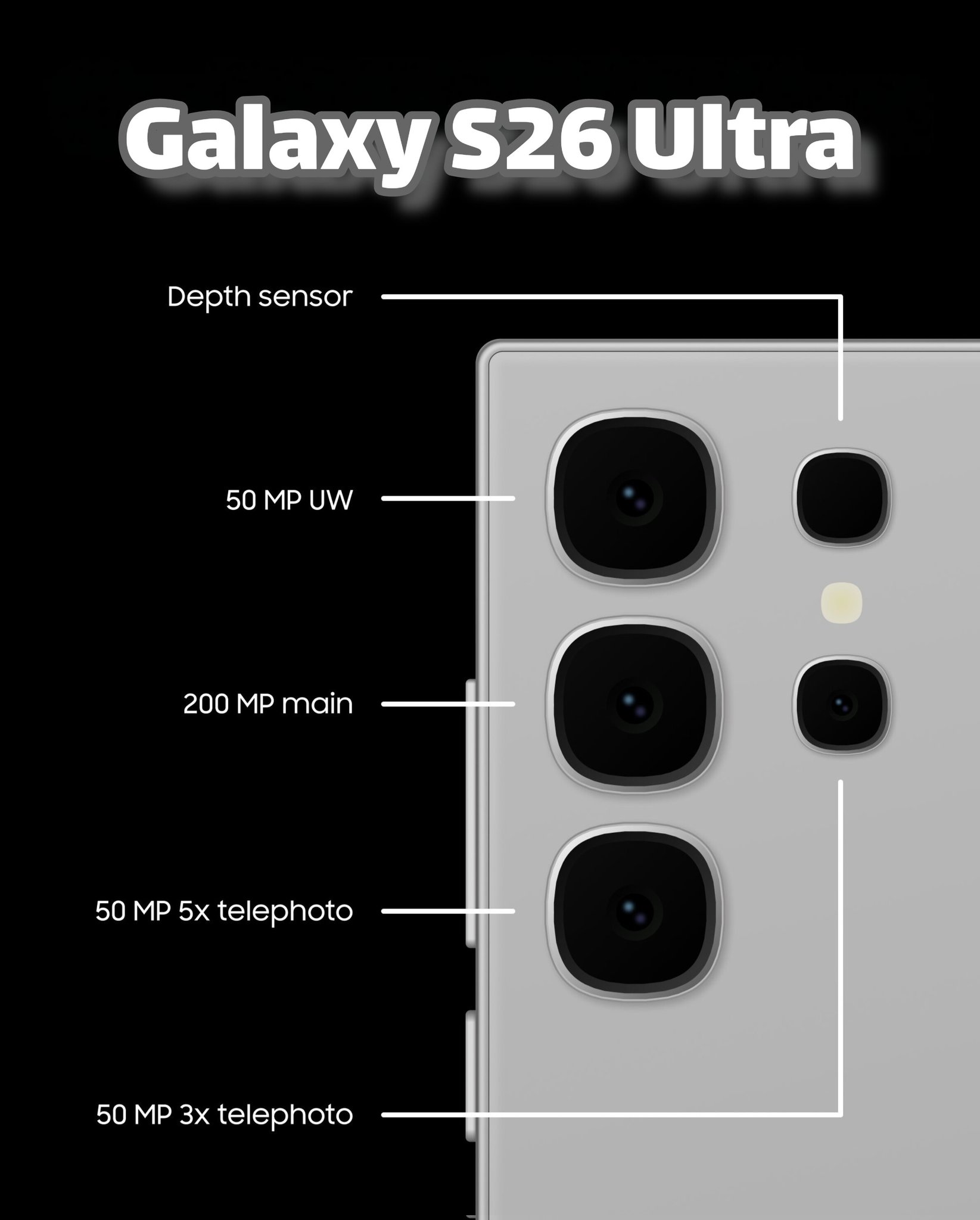
There was no mistake with the 1-inch sensors; Samsung went for the ISOCELL HPX (200MP Enhanced).
The Strategy: Instead of increasing the physical size (which thickens the phone), Samsung has concentrated on integration. The sensor now has a bonded, dedicated AI-ISP layer.
Variable Telephoto: The star of the show is a 4x-10x Continuous Zoom with a “Liquid Lens” feature. The S26 replaces the old 3x and 10x telephoto lenses with a periscope lens that has moving optical elements. Users will no longer face a dead zone due to digital cropping and will now be able to adjust the zoom level within the 4x and 10x range.
-
Battery: S26 Ultra’s Stacked Battery
The S26 Ultra aims to replicate a specific design within EV technology. S26 Ultra has a 5,800 mAh stacked battery, up from 5,000 mAh, with no thickness increase.
In the most recent release, Samsung has adopted 65W charging as the new default, with support for Qi2 wireless charging.
Final Thought
Samsung Galaxy S26 Ultra is not intended as a phone with “fun” features. This device has a very specific purpose as a design for power users who seek the highest-tier specs.
Advantages
The device has a variable optical zoom feature (4x-10x), a 5800 mAh battery that alleviates battery anxiety, and has a Snapdragon 8 Gen 5, a top-of-the-line, laptop-class chip.
Disadvantages
The device has solid-state buttons that may present a learning curve. In addition, the device’s starting price will most likely increase (starting at $1,399), and it has a “boxy” design that may be difficult for users with small hands to manage.
If you missed the S24 and S25, the S26 Ultra is the generational leap you were waiting for.